
A good campervan trip usually comes down to a handful of things: the right van for your group, knowing exactly what’s included, getting the basics sorted before you leave, and a sensible plan for where you’ll stop each night.
If it’s your first time, you don’t need to know the van inside out before you arrive. A short walkaround at collection covering heating, gas, electrics and the pop-top will cover the essentials, and a few good habits take care of most of the rest.
Understanding Campervan Basics
Before you start packing, get the big decisions sorted.
| What to check | What it means for your trip |
|---|---|
| Van size | A smaller camper is easier to manage but gives you less living and luggage space. Compact campervans suit couples or families who travel reasonably light; larger coachbuilts give you more room and power. Our VW California Ocean vs Ford Custom Limited comparison breaks down which suits which trip. |
| Driver age and licence | Most hire campers sit within a standard Category B licence, but always check the plated weight, and confirm the minimum driver age with your hire company before booking. |
| Mileage | Some UK hire companies use daily mileage limits, others offer unlimited mileage. Always check before you book. |
| What’s included | Kitchen kit is fairly standard across hire companies, but bedding, toilets and other extras vary a lot more. Confirm what’s included versus what costs extra. |
| Toilet setup | Larger coachbuilts often have built-in cassette toilets. Compact campers may use a portable toilet instead, so it’s worth checking which you’ll have. |
| 3-3-3 rule | Drive no more than 300 miles, arrive by 3pm and stay three nights. Useful as a reminder to slow down, but not a rule you need to follow literally. On the NC500, 100 to 150 miles can easily be a full day. |
At Compass Campers, unlimited mileage, kitchen equipment and a full gas bottle are included as standard on every hire, so it’s one less thing to check on the day.
Packing and Storage
A campervan’s got plenty of storage, it just works best when everything has its own spot. When you collect the van, snap a quick photo of the cupboards before you unpack. It’s a lot easier to remember where things started.
Packing cubes work well because they keep each person’s clothes together without filling the cupboards with loose items. Keep the things you use most near the door or bed, and put less-used kit further back. Our Scotland campervan packing list is worth a look before you start filling bags.
Weight matters too. Heavy luggage should sit low and reasonably central rather than piled high or right at the rear. A campervan’s payload is more limited than it looks, so four people, luggage and a full water tank can use more of it than you’d expect.
And don’t be surprised if you rearrange everything after the first day. Most people do. Twenty-four hours in the van will tell you far more about the best cupboard for the tea bags than ten minutes standing beside it at collection.
Managing Water, Power and Temperature
Water, power and ventilation determine how long you can comfortably stay away from a campsite. None of them is complicated once you know where the controls are.
Water and Waste Systems
Compact campervans typically carry a modest fresh water supply, with a similar-sized waste tank. Larger campervans and coachbuilts can carry considerably more.
How quickly you use that water depends on how you travel. Cooking, washing up and making tea soon add up, so don’t assume a tank will last several days just because it looked large at collection.
Grey water from the sink goes to a designated drain or service point. Don’t empty it onto the ground or into a roadside drain. If you’re travelling through the Highlands, it’s worth using a suitable service point when you find one rather than waiting until the tank is completely full.
Battery and Power Management
Campervans use separate starter and leisure battery systems. The starter battery gets the engine going. The leisure battery runs everything on the living side: lights, the water pump, and the rest of the onboard kit.
Ask your hire company to walk you through the control panel at handover, including where to check the battery level and anything you need to know about charging.
Hook-up cable lengths vary between hire fleets, so check what your van has rather than assuming.
Heating and Ventilation
Heating is useful on a Scottish evening, but ventilation matters just as much. Two people can release roughly a litre or more of moisture into the air overnight simply by breathing, and cooking adds more.
Leave some ventilation open, even when it’s cold. Completely sealing the van tends to leave you with wet windows and damp bedding by morning.
Cooking in Your Campervan
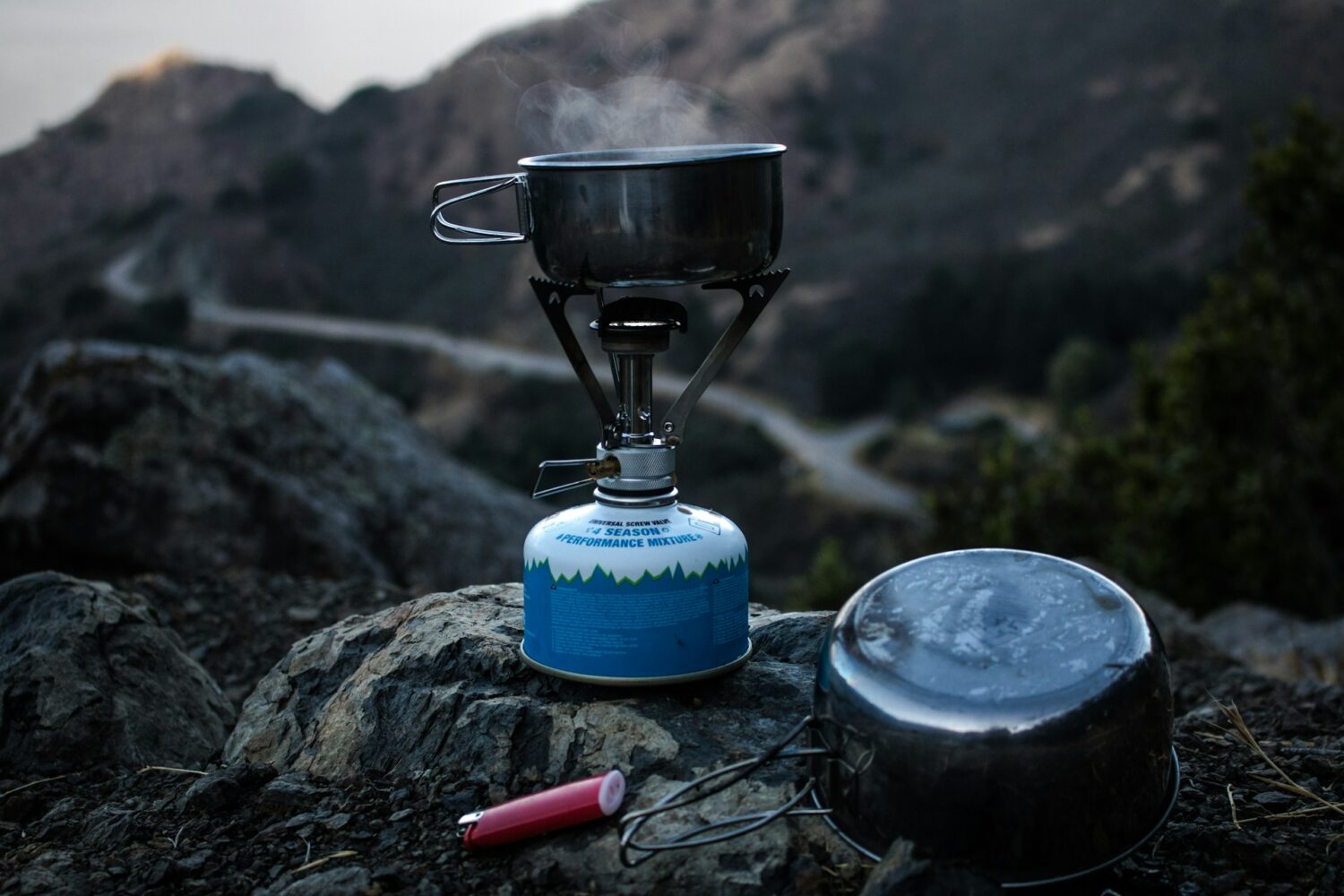
Check what’s in the kitchen before buying or packing extras. Most hire campers come with an integrated kitchen, cooking utensils, plates, cutlery, a kettle, a fridge-freezer and a full gas bottle as standard.
That covers most of what you’ll need for straightforward meals on the road.
Fridge space is still limited, so shop with the van in mind rather than trying to fit a normal weekly food shop inside it. Meals that use one or two pans are easier, and anything particularly strong-smelling is best cooked with a window or roof vent open.
After a long day around Applecross or further north on the NC500, simple usually wins.
Safety, Security and Maintenance
The van itself is the hire company’s responsibility, and a good handover makes life easier for everyone. A few habits on your end help the trip run smoothly.
- Do the walk-around with the team at collection, so any existing marks are noted for both sides before you drive off.
- A quick set of photos at collection and again at drop-off is good practice, and most hire companies are used to customers doing this.
- Lock the van whenever you leave it and keep valuables out of sight.
- Save your hire company’s contact number and breakdown cover details in your phone before you set off.
- Check what your insurance excess and security deposit cover, so there are no surprises either way.
- Collision damage waiver exclusions can still include tyres, wheels, the underbody and windscreen, so it’s worth knowing what’s covered.
- If something doesn’t look or feel right during the hire, contact your hire company rather than trying to repair it yourself.
Driving a Campervan Safely
Write the van’s height down before you drive away. Put it somewhere visible in the cab. Low bridges, car park barriers and overhanging obstacles are much easier to deal with when you don’t have to guess.
A campervan also needs a little more space than a car. Brake earlier, give yourself room through corners and use your mirrors properly. If reversing into a tight space, having someone outside to guide you is usually quicker than trying to be heroic about it.
An automatic gearbox removes one distraction for first-time campervan drivers, if that’s an option with your hire. Give yourself a little time on easier roads before heading onto narrow Highland lanes.
On single-track roads, use passing places properly and let faster traffic behind you through when it’s safe. You’ll enjoy the drive far more if you’re not watching a queue build in the mirrors.
For licences, the important number is 3.5 tonnes MAM. A standard Category B licence covers you up to 3,500kg. Over that, if you passed your test on or after 1 January 1997, you’ll generally need Category C1, so check the plate rather than guessing from the size of the van.
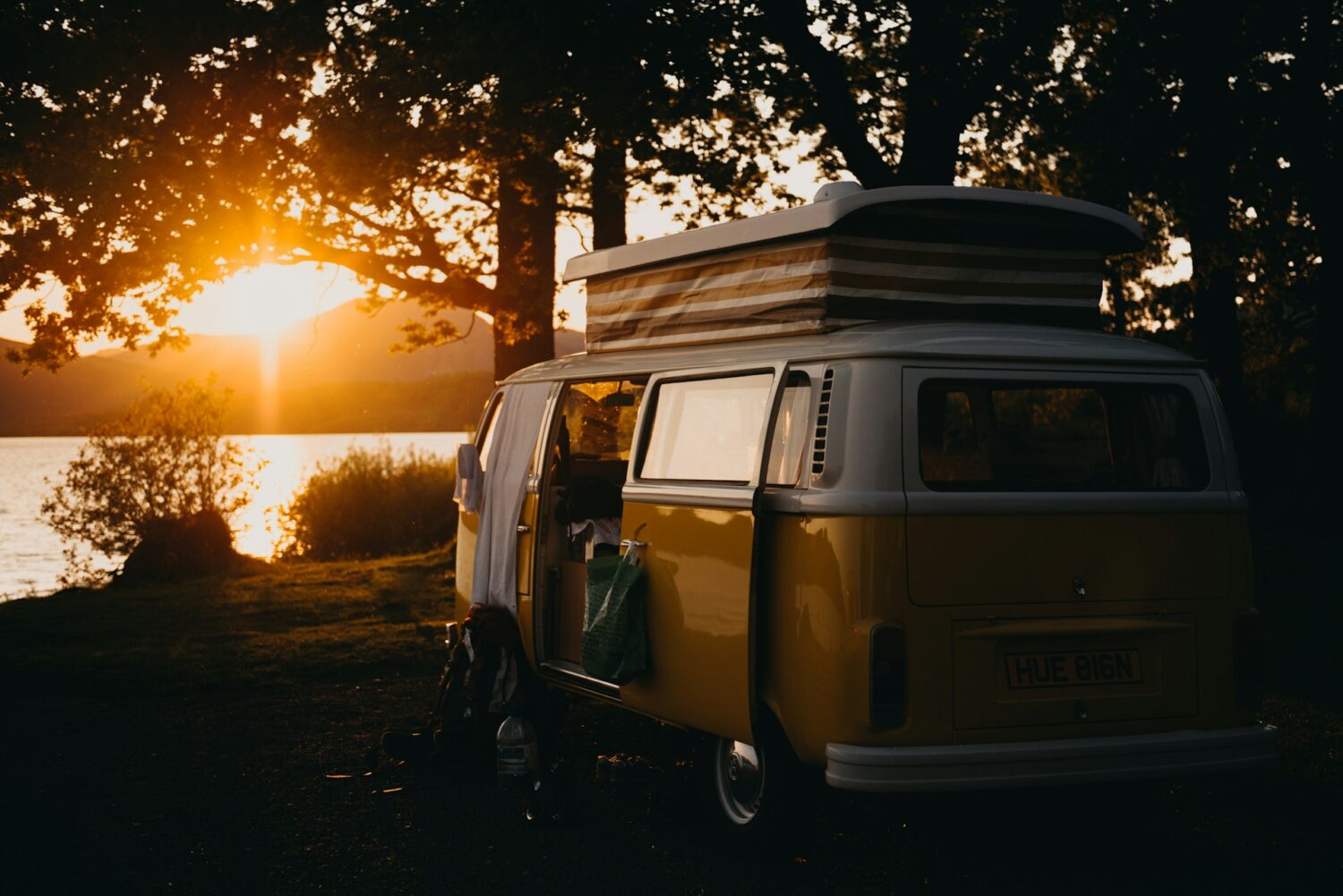
Travelling with Children
If you’re travelling with children, ask about the bed setup before booking. A sleeping space that works brilliantly for a six-year-old may feel very different for a tall teenager.
Check whether ISOFIX child-seat points are fitted if you need them, and at handover, it’s worth seeing how the beds work before you’re trying to set them up at the end of a long day.
Keep the itinerary realistic too. Scotland looks smaller on a map than it feels from behind the wheel, particularly once you’re on Highland roads. Fewer driving days and longer stops usually make family trips much easier.
Campervan Tips and Hacks
The difference between a relaxed trip and an irritating one is often a short routine before you drive away.
Use the same pre-departure checklist every time:
- Gas turned off as required
- Fridge door secured
- Hook-up cable unplugged and stowed
- Step retracted, if fitted
- Windows and roof vents shut
- Pop-top fully down and secured
Keep the checklist somewhere obvious.
And use the first day to work out what you actually reach for. If something keeps getting buried behind three other bags, move it. If you haven’t touched something since collection, it probably doesn’t need prime cupboard space.
Common mistakes are usually small ones: a fridge not secured properly, a roof vent left open or a cable forgotten at the pitch. The useful trick is to add the mistake to your routine so it doesn’t happen twice.
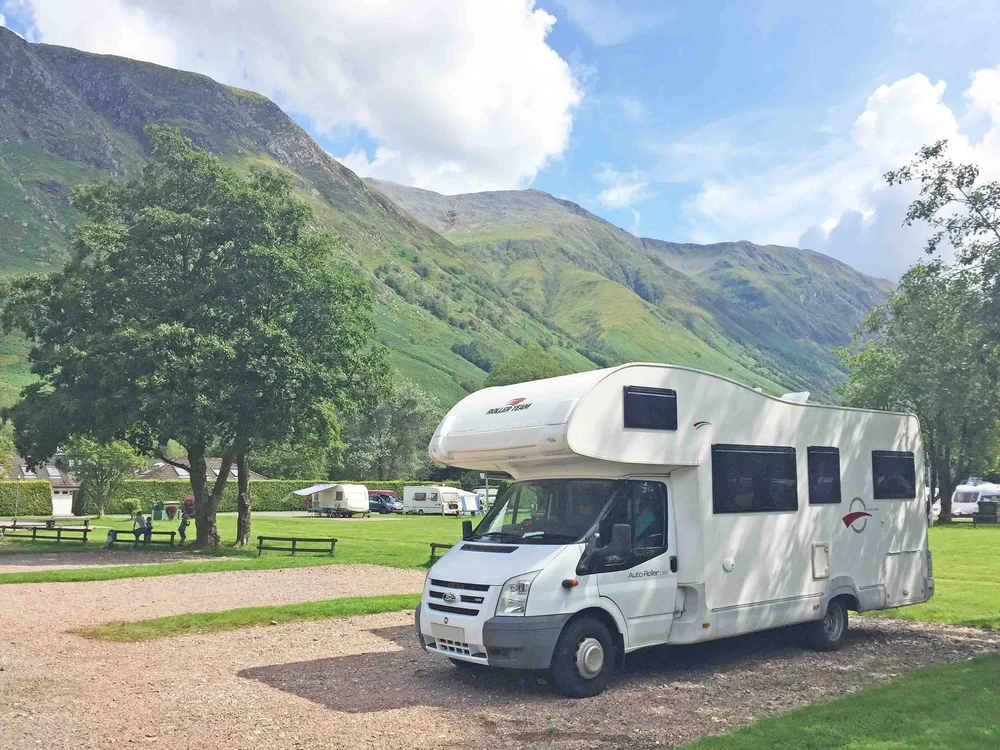
Finding Places to Stay
Where you can sleep in a campervan depends on where you are and what local restrictions apply. There isn’t one UK-wide rule that makes every legally parked vehicle an overnight camping spot.
Can You Sleep in a Campervan on a Public Road?
There’s no UK-wide ban on sleeping inside a legally parked vehicle. What matters is whether you’re allowed to park there in the first place and whether local restrictions apply.
Signs, Traffic Regulation Orders, obstruction rules and local “no overnight parking” or “no camping” restrictions can all change the answer.
One more thing worth knowing: under Highway Code Rule 250, vehicles over 2,500kg laden must display parking lights when parked on a road at night.
Can You Stay Overnight at a Motorway Service Area?
Often, yes, but it’s not normally free all night. Official motorway service areas provide a period of free parking, with longer or overnight stays usually charged.
That doesn’t necessarily mean you can treat the car park like a campsite. Chairs, awnings and cooking outside may be prohibited.
Motorway emergency refuge areas are different. They’re for emergencies, not overnight stops.
Can You Wild Camp in a Campervan in Scotland?
Scotland’s access rights under the Land Reform (Scotland) Act 2003 and the Scottish Outdoor Access Code apply to responsible lightweight camping, not to parking and sleeping in a vehicle.
With a campervan, you still need somewhere you’re legally allowed to park or the landowner’s permission.
Pay attention to local restrictions too. Loch Lomond & The Trossachs has camping management zones where permits are required for both tents and motorhomes/campervans in designated areas between 1 March and 30 September, and “no overnight parking” signs need to be respected wherever you find them.
On private land, permission matters. The fact that you’re in Scotland doesn’t create a general right to occupy land overnight in a vehicle.
Think About Where You’re Staying and What You Need from a Campsite
Choose campsites around what you’ll actually use. Fresh water and proper waste-disposal facilities are useful if you’ve been off-grid. Hook-up can make a wet or cold spell much easier.
For families, level pitches and nearby facilities tend to matter more than a long list of extras.
Location counts too. A site within walking distance of a beach, village or pub means you can leave the van set up instead of packing everything away for a short drive. Heading for the islands? Our best Isle of Skye campsites guide is a good starting point, and if you’d rather build a route around history than a beach, Scotland’s best castles make for an easy day out from most pitches.
Peak Highland pitches can now run from the high £20s to more than £50 a night, particularly when electric hook-up is included. Book ahead in July and August because popular sites on routes such as the NC500 can fill early.
Before You Drive off the Forecourt
The handover is where first-trip questions are easiest to solve. A good hire company will show you the beds, heater, hob, water, gas and electrics before you leave, and the toilet, if you’ve hired one.
If you’ve added a portable toilet, smaller units can need emptying every one to two days with regular use. Using campsite facilities during the day stretches that out. Toilet waste only goes into a designated chemical disposal point, and the toilet needs to be emptied before you return the van.
After that, keep the first day sensible. You don’t need to cover half of Scotland before dinner. Get used to the van, arrive while there’s still daylight, and enjoy being there. If anything’s still unclear before you book, get in touch and the team will talk you through it.